
Once I first launched Sintopia, it was immediately clear this was unmistakably a Team17‑type manufacturing: sharp, darkish humour wrapped in brilliant visuals and off‑kilter design. On this administration‑meets‑god sport, you play because the newly promoted administrator of Hell itself — managing sinners, extracting revenue, and in the end balancing life, dying, and resurrection throughout two vastly totally different worlds.
From the colorful visuals of the dwelling world to the bureaucratic chaos of the underworld, Sintopia grabs your consideration instantly. The idea itself — managing Hell as if it have been a dysfunctional company empire — is wildly enjoyable and unique. The Humus, a unusual civilisation of chickpea‑trying inhabitants, stay their lives oblivious to the devastation they’re destined for, and it’s your job to shepherd them by means of life, dying, Hell, and again once more.
Controls and Early Steerage — A Combined Bag
On the floor, the controls are precisely what you’d count on from a simulation sport: fundamental interactions are intuitive, navigation feels acquainted, and there’s nothing mechanically awkward to disrupt your circulation. That’s nice for accessibility, particularly in a posh title like this. However right here’s the place the primary actual situation crops up: steering. The tutorial introduces the fundamentals — but it surely typically fails to clarify the true affect of the techniques you’re interacting with.
Some early instruments can dramatically have an effect on your revenue and workflow, but the tutorial glosses over their deeper consequence. Taking part in on Regular mode, I rapidly discovered myself uncertain whether or not I used to be progressing strategically or simply spinning my wheels. These instruments affect important mechanics like how souls are queued, which immediately impacts your capability to revenue — however with out clear explanations, missteps occur too simply.
The Character of Sintopia — Attraction Meets Chaos
If there’s one factor Sintopia does nicely, it’s character. The world is brimming with darkish comedy — from sinful Humus antics within the overworld to the weird administrative duties of Hell Included. You may encourage the dwelling with divine powers or punish them with blunt spells; each decisions typically result in unpredictable, hilarious outcomes.
That mentioned, attraction alone doesn’t carry the sport. Whereas watching characters behave in amusing methods is compelling early on, that novelty wears off when the mechanical shortcomings begin to dominate your expertise.
Overworld vs Underworld — Two Halves of One Loop
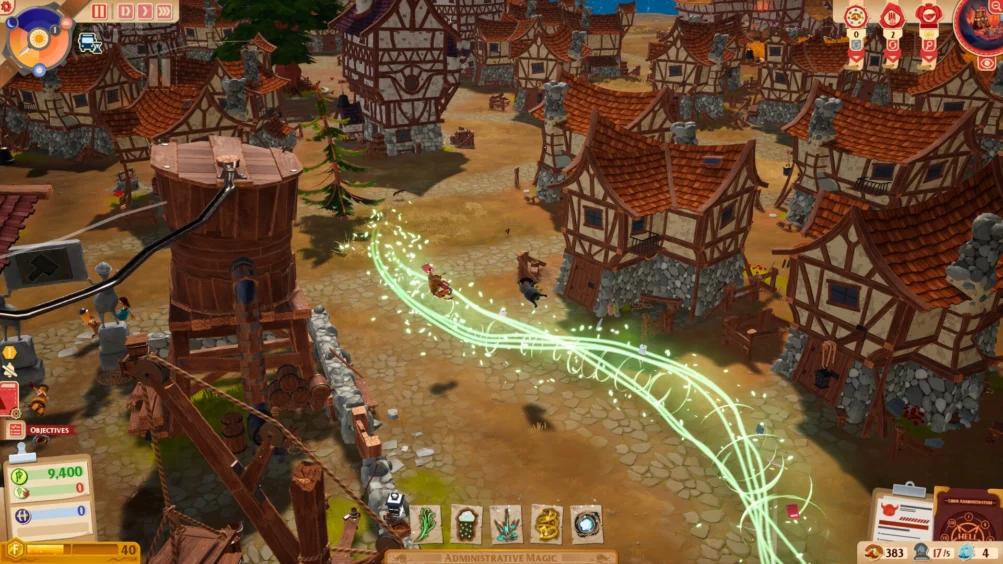
The twin‑realm design is certainly one of Sintopia’s most formidable options. On the overworld, you watch the Humus stay, work, die, and collect sins. Each Humus that dies turns into a soul within the Graveyard and awaits assortment by the Reaper Bus — and this cycle kinds the core loop of the sport.
Souls don’t simply sit idly; they accumulate sin over time. If left too lengthy, they’ll even reanimate as harmful “Zhumbies” that threaten your stability. As soon as in Hell, these souls are processed by means of sin‑punishing workshops, producing Purgadollars — the first forex of your underworld empire — after which finally reincarnated again into the overworld.
This asymmetrical loop — influencing the overtly chaotic overworld and organising the logistical nightmare of Hell — sounds nice on paper, and at occasions it actually does ship. However the stability between significant selections and passive ready isn’t fairly proper.
Stability and Mechanical Frustrations
One of many greatest points in Sintopia is stability. Administration sims thrive on giving gamers significant decisions and penalties, however right here, generally these penalties really feel both too harsh or too opaque. For instance, early instruments supposed to optimise your workflow can inadvertently create logjams in your soul‑processing chain. Mismanagement doesn’t really feel like a problem — it looks like poor communication.

A part of this stems from useful resource administration techniques that aren’t defined nicely. Souls toil by means of sin purification services to generate revenue, however additionally they acquire corruption if left idle. If too many souls rot or demon invasions happen, effectivity drops sharply. The overlap between overworld sin technology and underworld punishment provides a layer of strategic depth — but it surely additionally provides confusion in the event you don’t have a transparent roadmap on the outset.
Ready — The Large Slowdown
This brings me to the pacing: Sintopia is, at its core, a sport of ready. Even with the velocity‑up function engaged, there are substantial durations the place you are able to do little past watch timers tick down. In different simulation titles, there are normally facet goals, mini‑video games, or duties to have interaction with throughout downtimes — however in Sintopia, you’re left largely idle. This creates stretches of tedium that interrupt the in any other case compelling loop of life, dying, and processing.
What makes this stranger is that the mechanics themselves — sin ranges, corpse administration, zoning of punishment workshops — are genuinely attention-grabbing. However with out significant exercise throughout these idle phases, it’s simple to really feel bored quite than challenged.
Useful resource Crunches and Strikes
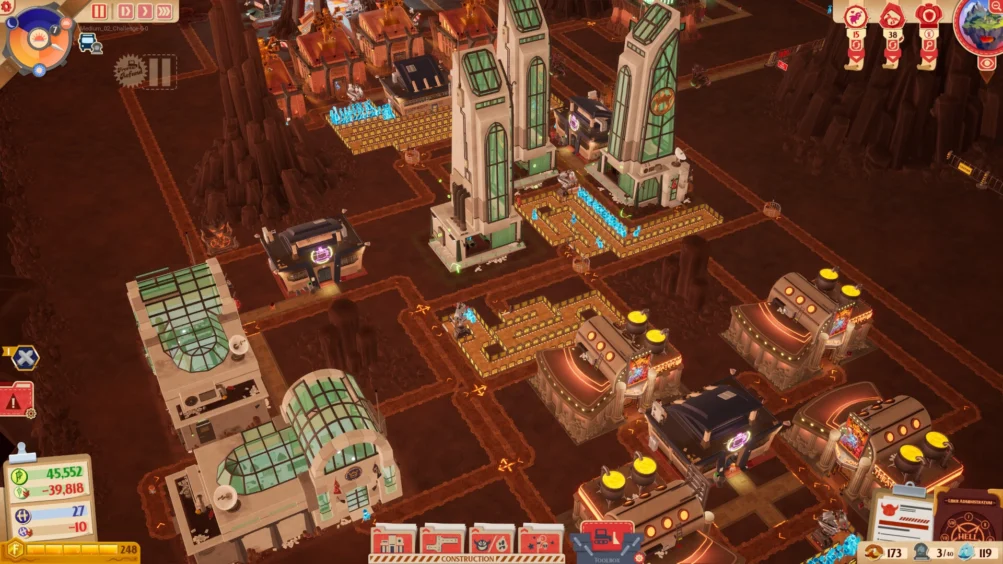
One other level of frustration is the interaction between cash and labour. Imployees — your demon workforce — are important for processing sinners. But when your funds run low, they actually stroll out (or worse, wreak havoc), halting progress and forcing you to pause your plan to repair staffing points. I’ve discovered myself in conditions the place the sport didn’t talk the danger of this occurring clearly, leading to irritating stalls in development.
Balancing fund circulation, staffing, and infrastructure turns into an intricate juggling act — however once more, as a result of the suggestions techniques aren’t all the time clear, that juggling ceaselessly feels extra demanding than strategic.
Visuals, Soundtrack, and Efficiency
On the technical facet, Sintopia runs easily on PC. Menus stay responsive, graphics are vibrant and stylised (suppose vibrant company Hell aesthetics quite than grimfire landscapes), and there are just about no graphical glitches. Digicam management is beneficiant, letting you zoom in on particular person Humus or zoom out to see your complete empire.
The soundtrack enhances the sport’s tone nicely — upbeat but mischievous, reinforcing the notion that you just’re enjoying in a world that takes itself simply significantly sufficient to make your struggling bureaucratic decisions really feel significant.
Accessibility and New Participant Expertise
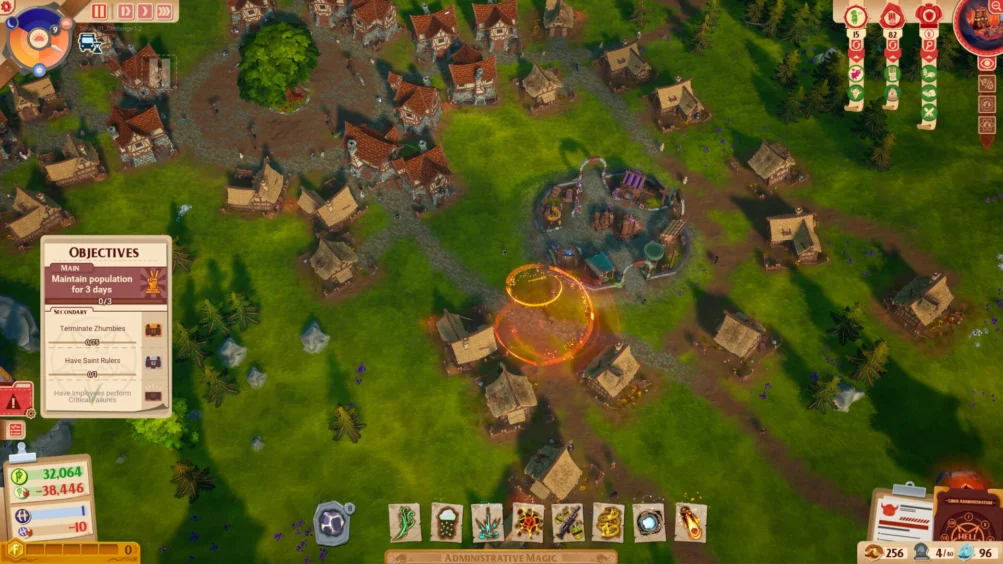
The place Sintopia might enhance — past tutorials — is accessibility. Its techniques are complicated, and for gamers who aren’t veterans of administration sims, the training curve can really feel steep. There are few assistive mechanics or interactive guides to assist construct confidence in your selections, that means newcomers may wrestle to see why the sport responds the way in which it does.
Last Ideas — A Distinctive Concept That Wants Sprucing
In the end, Sintopia is a captivating idea that doesn’t all the time stay as much as its potential. It has attraction, strategic depth, and genuinely intelligent techniques mixing god‑sport affect with deep administration logistics — however that potential is usually undermined by pacing points, complicated mechanics, and inadequate steering.
Followers of quirky simulation video games and Team17’s distinctive tone will discover loads to take pleasure in right here. However these searching for steady engagement, clear penalties, and satisfying development will probably really feel annoyed at occasions.
Sintopia Trailer
Learn extra superior critiques >>right here
The sport was offered to us for the specific function of reviewing.
Source link
